Seasonal Guide
Málaga in Winter: Christmas Lights, Mild Weather & the Three Kings Parade
Why the off-season is Málaga's best-kept secret. The full guide to Calle Larios, the Cabalgata de Reyes, December and January weather, what to pack and where to stay.
- By
- Málaga Club Editorial
- Published
- July 2026
- Last checked
- July 2026
- Read
- 9 min
Yes. Winter is one of Málaga's most underrated seasons. Daytime temperatures hover between 15°C and 18°C, the Calle Larios Christmas lights transform the city centre into a sound-and-light cathedral, and the Three Kings Parade on 5 January is the biggest night of the year. It is cheaper, calmer and more local than summer — and you can still lunch outside on a sunny terrace.
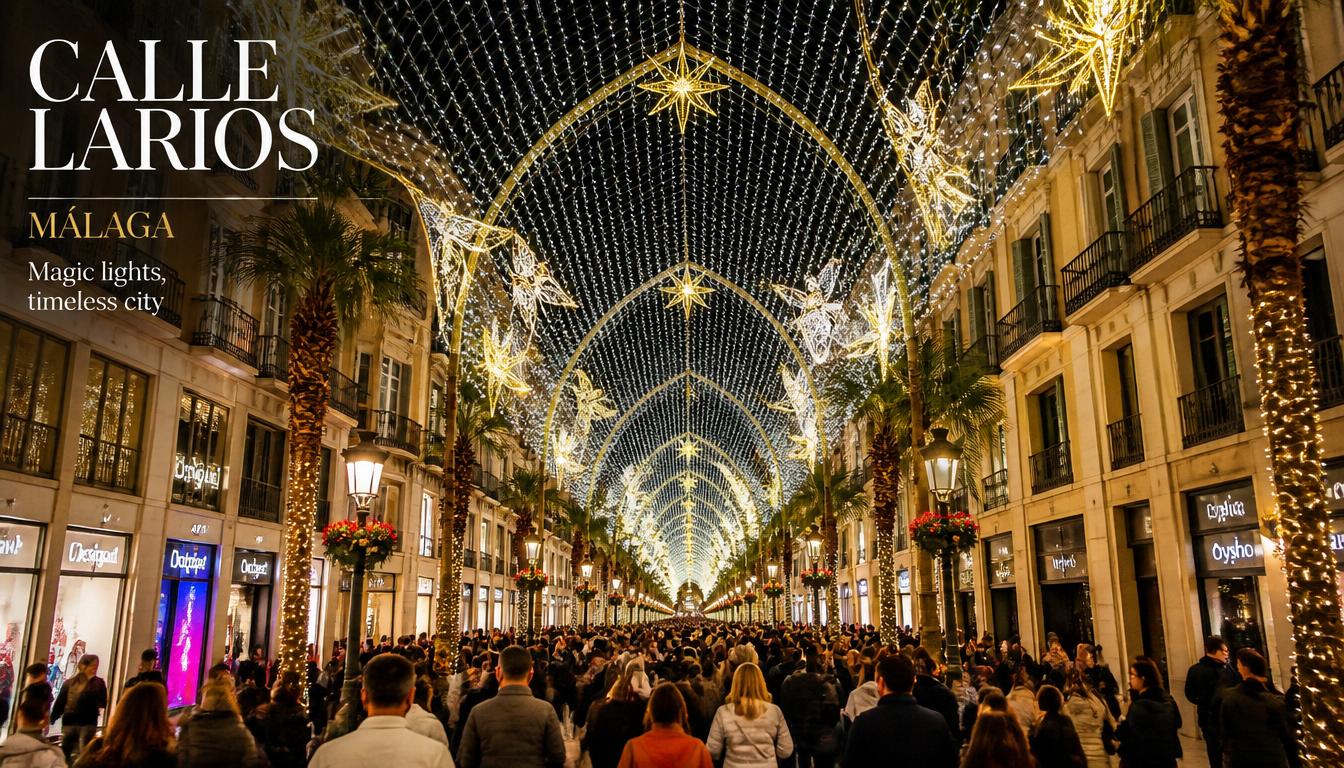
Most travellers think of Málaga as a summer city. But locals will tell you that winter — especially December and January — is when the city breathes. The beaches empty, the museums stay open, the terraces are still warm at midday, and the streets glow with one of the most ambitious Christmas light displays in Europe.
This guide covers everything you need to plan a winter trip: the exact dates and times for the Calle Larios light show, the weather you can realistically expect, the seasonal events that matter, and the packing list locals use themselves.
Why visit Málaga in winter?
- Price and peace: Hotels in the historic centre often drop by 30–40% compared to July and August. Restaurants do not require reservations a week in advance.
- Mild days: Average daytime highs of 16–18°C mean you can still walk the Alcazaba, visit the Roman Theatre and sit outside for lunch.
- Festival season: Christmas, New Year, Reyes and the Carnival build a full calendar of processions, markets and concerts.
- Culture without queues: The Picasso Museum, Centre Pompidou and Carmen Thyssen are quietest in January.
If you want Málaga with its manners intact — fewer cruise crowds, more Spanish spoken around you — winter is the time.
Calle Larios Christmas lights — the main event
The pedestrian spine of Calle Marqués de Larios — simply "Calle Larios" — becomes the city's living room for six weeks each winter. Local designers create a new theme most years, often with a sound-and-light canopy that runs the length of the street and plays on the hour.
| Detail | What to expect |
|---|---|
| Dates | Usually late November / early December until 6 January |
| Light show times | Several shows each evening, often at 19:00, 20:00, 21:00 and 22:00 |
| Best viewing | Arrive 15–20 minutes early, standing in the middle of the street for the canopy |
| Cost | Free — the street is fully pedestrian |
| Crowds | Heaviest on weekends and the opening/closing weekends; weeknights are calmer |
| Extra tip | Look up — the side-street arches and building façades are decorated too |
The city has won national awards for the installation, and it is worth planning an entire evening around it. Start with a hot chocolate at a café on the plaza, walk the length of the canopy during a show, then drift into the old town for a late dinner. The lights are switched off on 6 January, after the Three Kings Parade.
What happens in December in Málaga?
The city starts decorating in late November. By December, the centre is a continuous loop of lights, markets and concerts.
- Nochebuena (24 December): A family evening. Many restaurants close, but hotel restaurants and a few tapas bars serve a special menú. Book ahead.
- Christmas Day (25 December): A public holiday. Most shops close, but museums and some restaurants open. The city is quiet and beautiful.
- Plaza de la Constitución ice rink: A temporary outdoor rink usually appears in the main square. A very popular family outing, especially at sunset.
- Belén nativity scenes: Look for elaborate nativity scenes in the Cathedral, the Alcazaba and around the old town. Some are historic and handmade.
- Concerts and choirs: The city programmes free choral concerts in churches and plazas throughout the month.
For food, many bars serve roscones (sweet ring cakes) and thick hot chocolate from mid-December onward. It is a perfect excuse to pause between sights.
What happens in January — New Year and the Three Kings
January is when the city turns back to itself. Tourists thin out, but the calendar stays busy until Reyes.
- New Year's Eve (Nochevieja, 31 December): The main gathering is in Plaza de la Constitución. Expect music, a countdown and the Spanish tradition of eating twelve grapes at midnight. Book a restaurant weeks ahead if you want a sit-down dinner.
- New Year's Day (1 January): Very quiet. Museums are often closed; the beach is the best place for a peaceful walk.
- Three Kings Parade (Cabalgata de Reyes, 5 January): The biggest procession of the year. The three kings arrive by sea at La Malagueta in the late afternoon, then parade through the city centre with floats, bands, dancers and sweets thrown to the crowds. It ends near the City Hall. Arrive early for a good spot; the seafront section is less packed than Calle Larios.
- Día de Reyes (6 January): The public holiday when children open their presents. Most shops close, but it is a wonderful day to watch local families in the parks and promenades.
On 6 January, families eat roscón de Reyes — a ring-shaped cake filled with cream and hiding a small figurine. Bakeries around the old town sell them by the slice.
Winter weather in Málaga: month by month
Málaga is protected by mountains to the north and open to the Mediterranean to the south. That combination keeps winters milder than almost anywhere else in mainland Spain. But it is not summer — evenings are cool and rain is possible.
| Month | Average high | Average low | Rainy days | Sea temp | Daylight |
|---|---|---|---|---|---|
| December | 17–18°C | 8–9°C | 7–8 | 16°C | ~9.5 hrs |
| January | 16°C | 7°C | 8 | 15°C | ~9.5 hrs |
| February | 17°C | 8°C | 6 | 15°C | ~10.5 hrs |
The rain, when it comes, is usually short and sharp. A morning shower rarely ruins a whole day. By midday the sun often returns and the terraces fill again.
What to pack for Málaga in winter
The key is layering. Mornings and evenings can feel like a crisp British autumn, but a sunny afternoon can feel like late spring.
- A light down or waterproof jacket
- A warm jumper or fleece
- Long-sleeve T-shirts and a long pair of trousers
- Comfortable walking shoes with grip
- A scarf or light coat for the evening
- Sunglasses and sunscreen
- An umbrella (compact, just in case)
- A smarter outfit for a Christmas dinner out
Do not overpack for the beach. Most locals do not swim, but a morning walk along La Malagueta in a T-shirt and jeans is a real winter pleasure.
Winter beaches and sea swimming
The beaches stay open and the promenades stay busy with runners, dog walkers and retired residents. The sand is warm in the sun, and you can usually find a chiringuito open for a coffee or grilled sardines at midday.
Sea swimming is for the brave. The water drops to about 15–16°C, so most people stay on the sand. A few winter swimmers and paddleboarders do go in, but a wetsuit is recommended.
For the best winter beach walk, start at La Malagueta and stroll east along the Paseo Marítimo to Pedregalejo and El Palo. The fishing boats, the espeto smoke and the mountain backdrop are at their most peaceful in January.
Where to stay in winter
For a Christmas trip, base yourself within walking distance of Calle Larios and the old town. The light show is the main reason you are there, and you will want to stroll in and out several times.
- Centro Histórico: Best for the lights, the Cathedral and the tapas bars. Hotels with rooftop terraces give you warm winter sun and city views. See our full neighbourhood guide.
- La Malagueta: If you want a sea-view apartment and quiet mornings, this is the beach neighbourhood closest to the centre.
- El Palo / Pedregalejo: For a local, low-season feel. The seafood is excellent and the promenade is beautiful at sunrise. You will need a bus or taxi for the light show.
Winter is the best time to book a hotel with a rooftop pool — you might not swim, but the sun loungers and views are worth the upgrade.
Best winter day trips from Málaga
Winter is arguably the best season for inland trips. The hills are green, the air is clear, and the crowds at the Caminito del Rey and the Alhambra are thinner.
- Ronda: Dramatic, cooler, and atmospheric in mist. The gorge views are sharper in winter light.
- Granada and the Alhambra: Book tickets in advance. January is far quieter than summer, but the Nasrid Palaces still sell out.
- Nerja and Frigiliana: The caves are warm and the village is quiet. A good choice for a sunny winter afternoon.
- Antequera: Dolmens, Renaissance churches and the Torcal rock formations. Often frosty in the mornings, so dress warmly.
See our full day trips from Málaga guide for transport details.
Practical tips for a winter visit
- Book flights early for Christmas: Málaga-Costa del Sol Airport (AGP) is busy with returning residents and Spanish families. Christmas Eve and New Year's Eve flights fill up fast.
- Restaurant closures: Many family-run restaurants close on 24, 25, 31 December and 6 January. Check ahead or book a hotel restaurant.
- Public transport: The Cercanías train to the airport and Renfe station run on holiday schedules. Check timetables on 24, 25, 31 December and 1 January.
- Museum hours: State museums are closed on 25 December and 1 January, and sometimes 6 January. Municipal museums may have shorter hours.
- Spanish school holidays: The second half of December and the first week of January are busy with local families. Book the Caminito del Rey and the Alhambra early.
Planning your winter trip?
Pair this guide with our things to do and eat & drink guides, and get from the airport to the centre in 12 minutes with our airport transport guide.
A note on freshness: opening hours, prices and transport in Málaga can change. Confirm time-sensitive information through the official source before you travel.